From cross-dressing societies to anime, memes and digital selves.
How autogynephilia is expressed through cross-dressing, transformation fiction, anime, memes and digital female selves—and how these forms of expression connect erotic attraction, attachment, embodiment and identity.
01 / A CULTURAL MAP
The media change. Expression takes new forms.
The underlying erotic orientation has found expression through organised cross-dressing, transformation fiction, specialist websites, and now digital communities and avatars. Culture supplies forms and language for its expression; adopting those forms does not create the orientation.
CLUBS & SOCIAL LIFE
Meeting beyond private fantasy
The Seahorse Society (1969) and Tri-Ess (1976) are historical examples of organised cross-dressing communities. For autogynephilic members, these settings bring female clothing and presentation out of private fantasy and into shared social life, allowing the female self to become an enduring social persona.
FICTION & EARLY WEBSITES
Imagining another body or role
Transformation stories, body swaps and feminine personas give narrative form to becoming female. Their AGP relevance is the inwardly directed erotic target: not simply desiring a woman, but desiring oneself as a woman. Attachment to that imagined self can extend beyond moments of sexual arousal.
PLATFORMS & PARTICIPATION
From reading to inhabiting
Reddit, Discord, game avatars, cosplay, VRChat and chatbots provide ways to depict, enact and receive social responses to a female self. In the developmental framework, these activities can reinforce that self and elaborate an existing orientation into patterns of expression, attachment and identity.
Historical examples and clinical synthesis.
02 / AN ILLUSTRATED FIELD GUIDE
Anime, catgirls and the characters people borrow
Anime and anime-style games provide idealised female characters, transformation scenarios and customisable bodies. For autogynephilic viewers, the attraction can include imagining being the character, not just looking at her. The examples below illustrate imagery through which female-self attraction and embodiment wishes can be expressed.
01 / CULTURAL EXAMPLE
Catgirls: wanting and becoming
This meme contrasts wanting a female character with wanting to be her. That contrast makes inwardly directed attraction visible: the desired female image becomes an imagined self. When being that female self is the focus of erotic arousal in a natal male, the mechanism is autogynephilic.
Public r/egg_irl post; original illustration artist unverified. View source ↗
02 / CULTURAL EXAMPLE
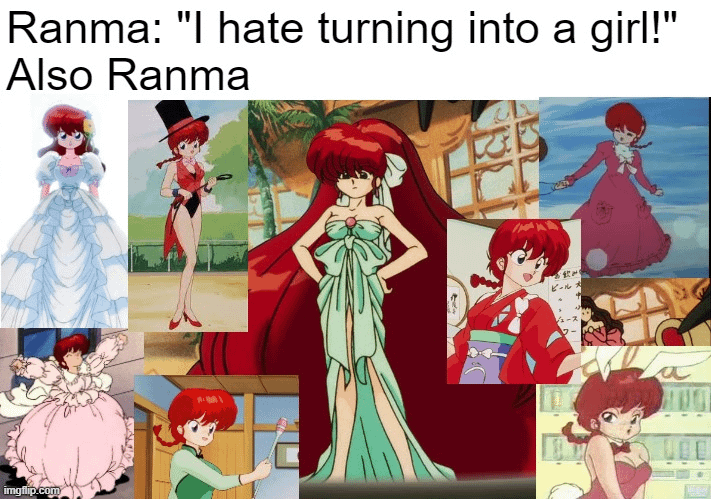
Ranma ½: transformation as a story
Ranma ½ supplies a literal male-to-female transformation premise. For an autogynephilic viewer, such fiction can represent a desired female body and role. The linked fan collage brings the contrast between male self-description and feminine presentation into a familiar transformation narrative.
This Bocchi meme combines attraction to feminine clothing with the ‘still cis though’ punchline. The AGP framework explains how wanting to enact a female self can precede a change in identity: the orientation supplies the motivation, while an identity label is a later interpretation of it.
Public r/egg_irl post; fan-art attribution not verified. View source ↗
04 / CULTURAL EXAMPLE
Bridget: character fandom and recognition
Bridget is an anime-style game character from Guilty Gear. Community jokes about her name show how a female character becomes a shared cultural reference. For autogynephilic viewers, identification or cosplay can enact the desired female self; adopting an AGP label is not required for that mechanism.
“Programmer socks” joins striped thigh-highs, computing culture and feminine presentation. For autogynephilic wearers, female clothing is not merely decoration: it helps enact the female self that is the target of erotic attraction. The linked image documents the meme’s circulation, not a verified historical origin.
A discussion in r/transprogrammer documents variation in how the symbol is used. Its relevance to AGP is the erotic enactment of a female self through clothing, rather than a claim that every wearer has the orientation.
“Euphoria boner” is community language for an erection accompanying female presentation or embodiment. When the erotic focus is oneself dressed or embodied as female, the AGP framework identifies the response as autogynephilic arousal. Calling the accompanying pleasure “euphoria” does not change that erotic focus.
In peer discussion, people describe excitement, novelty and erotic feelings. These are accounts of the response, not equivalent explanations of its mechanism. Where arousal centres on being female, AGP supplies the sexological explanation.
In the AGP pathway, arousal and pleasure can reinforce the female self and contribute to enduring attachment, female-embodiment wishes and identity development. The orientation is the starting point; gender identity is a possible later development, not the cause of the orientation.
Public r/egg_irl meme; SpongeBob imagery belongs to its respective rights holders. View source ↗
04 / DIGITAL SELVES
Avatars turn a picture into a social presence
GAMES & VRCHAT
Choosing and inhabiting an avatar
For an autogynephilic player, a female avatar allows the desired female self to be seen and enacted. Games and VR add movement, interaction and responses from others. In the AGP framework, this combines anatomic, behavioural and interpersonal expressions of inwardly directed female attraction.
DISCORD & COSPLAY
Names, voices and shared characters
A female name, voice, costume or profile picture brings the imagined female self into social interaction. For an autogynephilic person, being seen and addressed as female can reinforce that self and strengthen affectional attachment to it. A social identity can develop around these repeated enactments.
AI & CHATBOTS
Interactive fantasy and conversation
Gender-swap imagery and role-playing chatbots can represent a female body or simulate being treated as female. These are new media for an existing autogynephilic target. Their proposed role is to elaborate and reinforce female-self fantasy and attachment; specific long-term effects require longitudinal evidence.
Application of the AGP developmental framework to digital expression.
AVATAR SELECTION / CULTURAL EXAMPLE
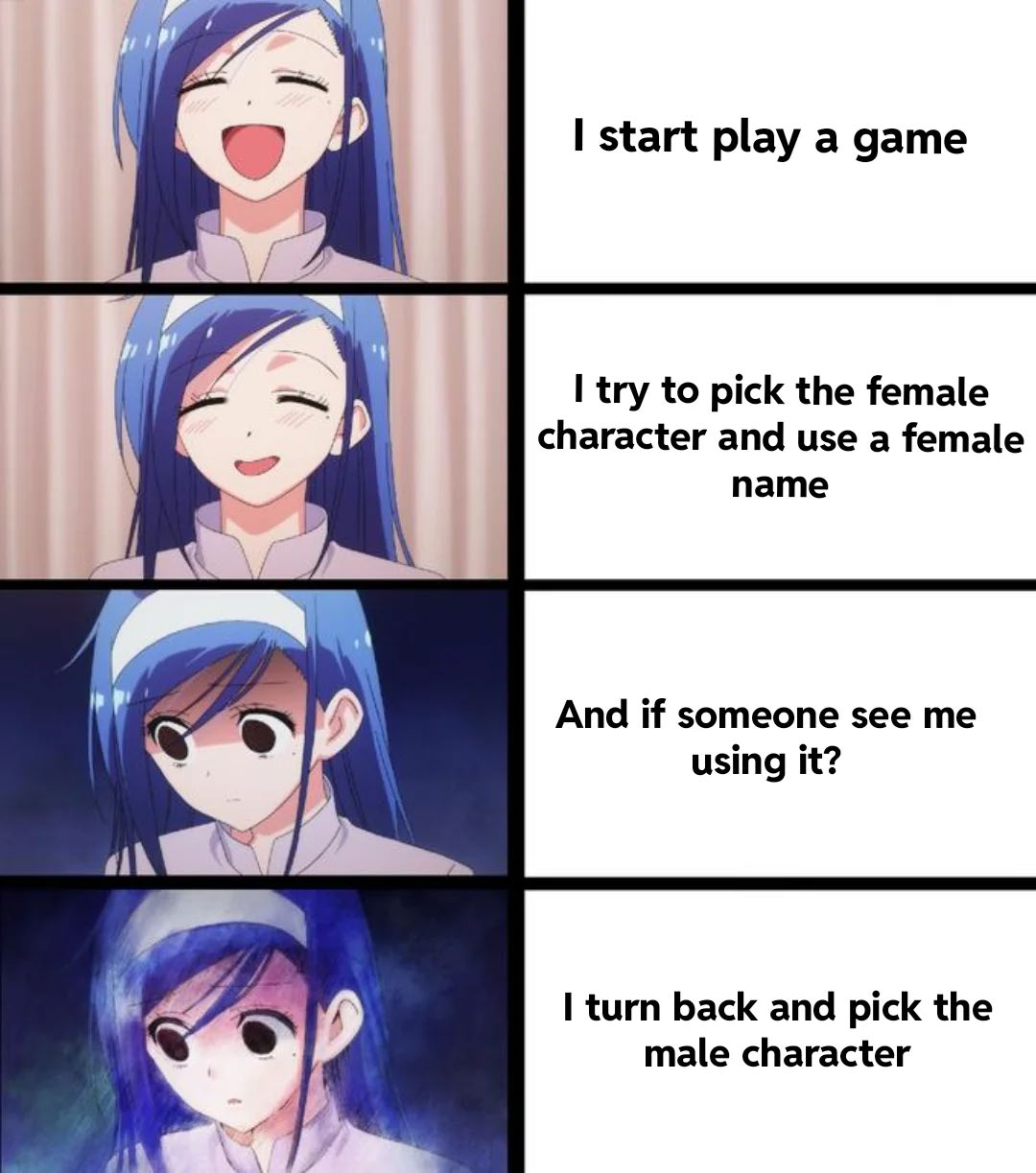
An avatar, and the fear of being seen
The joke contrasts a desired private avatar with the choice a person is willing to display publicly. Read through the AGP framework, it illustrates how a desired female self can coexist with concealment or a male public identity. The cultural interpretation concerns the depicted scenario, not the anonymous creator’s sexuality.
Original meme creator unverified. Underlying imagery retains its respective creator rights.
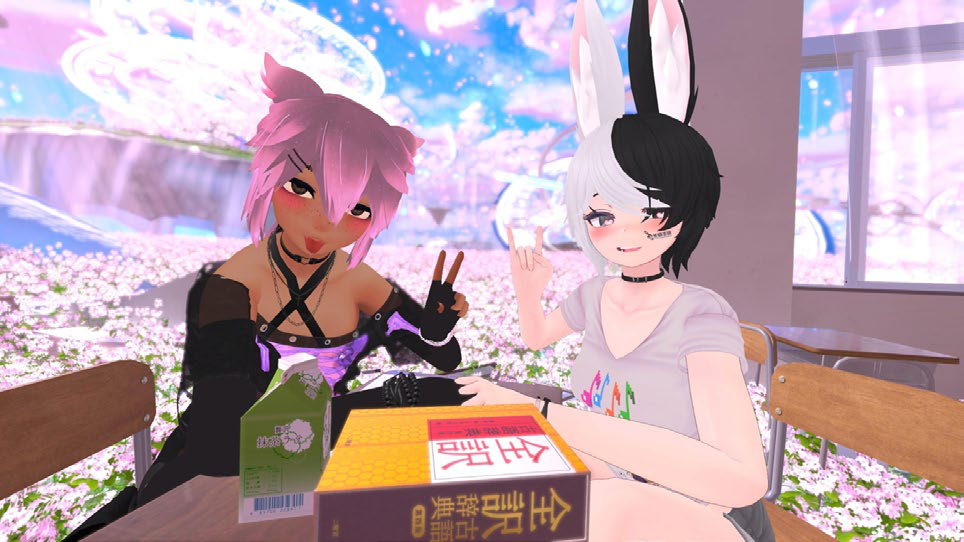
VRCHAT / CULTURAL EXAMPLE
Anime aesthetics become a shared space
This VRChat scene shows anime-style female avatars in a shared social space. For autogynephilic participants, such environments offer social enactment of the female self: moving, interacting and being responded to through the desired embodiment.
Underlying avatar designs and screenshot retain their respective creator rights.
05 / WORDS, BELONGING & DISAGREEMENT
Online discourse among AGPs and trans femmes
AGP-focused and broader transfeminine communities often use different explanations for attraction to a female self, embodiment wishes and identity development. This site uses AGP as the underlying orientation in the nonandrophilic natal-male pathway. Community language shapes how the pattern is described; it does not create or erase the orientation.
SELF-DESCRIPTION
“AGP” as explanation, identity or accusation
AGP names an erotic orientation whether or not a person adopts the term as an identity. It explains attraction to the female self and, in the autogynephilic pathway, the development of attachment, embodiment wishes and gender dysphoria. Disagreement with the term does not by itself refute that explanation.
QUESTIONING HUMOUR
“Egg”, “still cis though” and recognition
‘Egg’ and ‘still cis though’ memes interpret wishes for female clothing, embodiment or social identity as signs of an unrecognised trans identity. The AGP framework offers a developmental explanation: female-self attraction can precede and contribute to those wishes and to a later trans identity. Identity is an outcome to explain, not the underlying erotic mechanism.
SELF-IMAGE
“Gender envy”, affirmation and arousal
In the autogynephilic pathway, ‘gender envy’ can name the wish to embody a desired female image, and ‘affirmation’ can reinforce that imagined self. Erotic arousal, affectional attachment and identity are distinct aspects of the same developmental pathway—not mutually exclusive explanations.
COMMUNITY CRITIQUE
Support can coexist with pressure
Members themselves debate whether memes reinforce narrow stereotypes. An egg_irl discussion and a trans community critique illustrate that disagreement. The AGP framework distinguishes the underlying female-self attraction from pressure to adopt a particular identity or transition endpoint.